Oscar Thøgersen, Skygard: We cannot sit in Europe and watch China and the US take a data hegemony
In this episode of our podcast Digitaliseringsboden (in Norwegian), we dive deep into exactly this — and into why the data centre remains the very backbone of digitalisation. We meet Oscar Thøgersen.
Today’s guest: Oscar Thøgersen
Oscar Thøgersen is CCO at Skygard and has long experience working with cloud and digital infrastructure. He has worked at both Amazon Web Services and Microsoft, and has had close collaboration with the Google platforms through the partner ecosystem. This background gives him a rare overall view of the interplay between cloud services, data centres and the underlying infrastructure.
Today, he works on building and operating Norwegian data centres for businesses with high demands for security, control and sustainability. With solid expertise in AI, computing power and data centre architecture, he contributes both strategic and practical perspectives on how digital services actually become possible.
The cloud is a data centre — not magic
One of the most important reminders in the conversation is perhaps also the most fundamental: “The cloud” is a data centre.
Behind every cloud service there are physical buildings, servers, power supplies, cooling and networks. There are owners, locations and jurisdictions. When we “upload to the cloud”, we are in reality moving our data into someone else’s data centre — under their terms.
That is why choosing a platform is not just about functionality and price, but about risk management. The moment you do something with your data, you take on risk. The question is how that risk is managed — and by whom.
A data centre is a long-term choice
A data centre is not something you can simply move in and out of. Once physical infrastructure is in place, you have “married yourself a little” to both the technology and the supplier. That makes the choice of ownership, financial structure and security level decisive.
The episode discusses, among other things, the difference between co-location and hyperscale, shared responsibility between data centre supplier and customer, and why public-sector and security-critical actors often do not fit into standard cloud solutions — legally or technically.
This is why authorities such as the Norwegian National Security Authority (NSM) and the Norwegian Communications Authority (Nkom) have developed extensive checklists for the procurement of data centre services. A data centre is not just IT — it is critical infrastructure.
Geopolitics, ownership and data
The conversation is quickly lifted from the technical to the geopolitical. Because who actually controls our data today?
American ownership may mean American legislation. Chinese technology may mean other forms of state insight. This does not mean that all foreign technology is “dangerous”, but it does mean that deliberate choices are necessary.
That is why there is increasing focus on European and national alternatives — and on building a digital backbone in Europe. The point is not to shut out the world, but to avoid total dependence.
Europe cannot sit still and watch China and the US take a data hegemony.
AI, computing power and the real bottleneck
Much of today’s technology debate is about AI. But behind the models, the platforms and the headlines lies a very concrete reality: AI requires enormous computing power.
The money is in the hardware. In the GPUs. In the electricity. In the data centres.
If Europe is to succeed with AI in practice, it is not enough to be good at regulation and software. Physical capacity must be built — quickly and at scale.
Sustainability: from problem to opportunity
Data centres are often associated with high energy consumption. Rightly so. But the episode also shows how data centres can become part of the solution — not just the problem.
By connecting data centres to district heating networks, surplus heat can be used to warm thousands of homes. Correctly located and correctly built, data centres can contribute to energy utilisation, security of supply and local value creation.
Here, location becomes decisive. Location is not just about security, but also about sustainability.
A new look at the infrastructure we take for granted
The data centre is rarely visible in our daily lives. Yet it is the foundation for everything from public services to AI, the power grid and communications.
This episode sends a clear message: Digitalisation is not just about apps and cloud platforms — it is about control, responsibility and long-term choices.
Or put another way: Before you ask what the cloud can do for you, you should ask whose cloud it actually is.
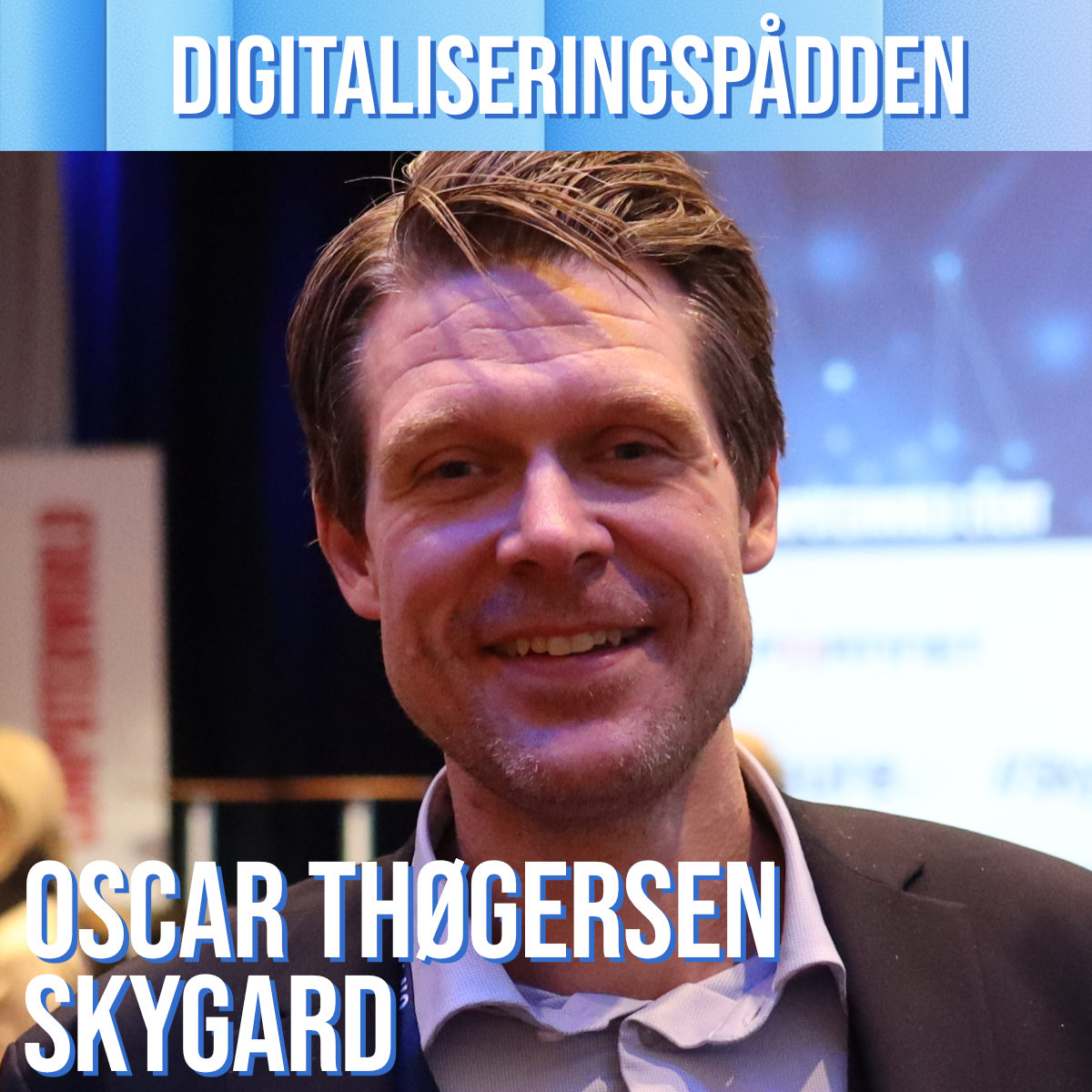
Oscar Thøgersen from Skygard
Want to know more?
We'll show you AlonLearn or AlonSkills in 15 minutes — tailored to your sector.