Professor Arnulf: When AI meets a workplace without a language for competence
In the workplace, we often say that “competence is our most important resource”. Yet it is rarely clear what we actually mean. Terms such as leadership, analysis, development or collaboration are used broadly and often differently — by managers, HR, educational institutions and technology communities. The result is that we try to manage, recruit and develop people with a language that is too general to function as a steering tool.
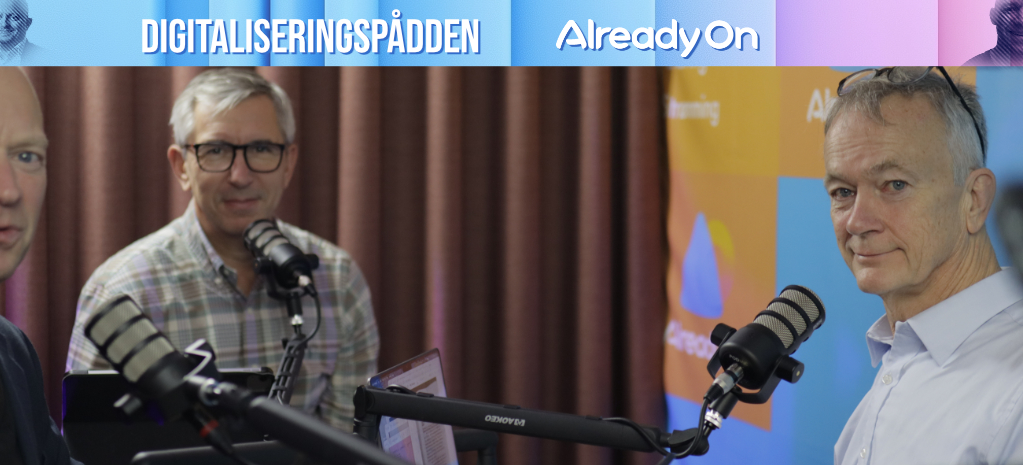
This is one of the main points of a recent episode of our podcast Digitaliseringspodden (in Norwegian), in which Professor Jan Ketil Arnulf from BI Norwegian Business School and Stig Elsfjordstrand from AlonSkills discuss how the lack of precision in competence language limits both organisational development and the use of AI.
Arnulf points to a fundamental paradox: Technology today is capable of analysing, synthesising and proposing solutions at a level we have never had before. But without clear concepts to work with, even technology has no good starting point.
When managers do not know what they need
A recurring theme in the conversation is that many managers, in practice, are unable to describe what competence they actually need. Job advertisements become vague, learning measures are only weakly linked to real role requirements, and recruitment is often more about experience and gut feeling than about precise needs.
This is not necessarily a leadership problem alone. It is a systemic problem. Without a shared framework for competence, it becomes difficult to compare roles, assess levels and see connections across the organisation. As a result, strategic competence management becomes almost impossible.
AlonSkills: structure before technology
This is where AlonSkills comes in — not as an HR tool in the traditional sense, but as a structural tool for competence. AlonSkills takes its starting point in what each role actually requires by way of competence, and builds a precise, structured framework based on a shared taxonomy and clear competence descriptions.
The point is not to map what employees know, but to create an overview of:
- which competences are critical in different roles
- how these competences vary by context and level
- and where there are overlaps, gaps and development opportunities in the organisation as a whole
Once this language is in place, it opens the door to far better decisions — whether about recruitment, internal mobility, learning or the use of AI for analysis and planning.
AI presupposes precision
An important point Arnulf raises is that AI does not magically solve unclear problems. On the contrary, the technology amplifies both strengths and weaknesses in the underlying data. If the terms are unclear, the analyses become unclear as well.
That is why the work AlonSkills does is interesting in a broader digitalisation perspective. Before you automate, analyse or optimise, you have to agree on what you are actually talking about. Only then can AI be used to size competence needs, compare roles or support strategic choices.
From fine words to actual governance
For many organisations, this represents a shift in how they think about competence. From general formulations and informal assessments — to explicit descriptions that can be used, shared and developed further over time.
It is no small undertaking. But the alternative is to keep investing in technology without having the language needed to get value from it.
And perhaps it is precisely here that much of tomorrow’s competitive strength lies: Not in who deploys the most AI first — but in who actually knows what they need it for.
Want to know more?
We'll show you AlonLearn or AlonSkills in 15 minutes — tailored to your sector.